From Spice Trails to Island Tables – My Indian Cookery Class at Hurawalhi
It was late morning on a sun-drenched day at the naturally chic, Hurawalhi Island Resort, the sort of day when the Maldivian ocean seems to stretch infinitely, turquoise brushing up against horizon blue. I was a few steps away from the soft white sands and the signature overwater villas, yet I found myself transported, not to another island, but across the vastness of the Indian subcontinent, led by the sizzle of spices and the warm voice of a passionate chef.
I had signed up for the cookery class included in Hurawalhi’s “Gastronomic Getaway” package, a culinary immersion designed for food lovers who crave more than just indulgence. As someone who’s spent years experimenting in the kitchen, I wasn’t expecting to be surprised. But from the moment I stepped into Canneli Restaurant, where the class is hosted, I knew this would be something different. This was going to be a story told in aromas and textures, in cumin seeds and curry leaves.
A Culinary Journey Across India
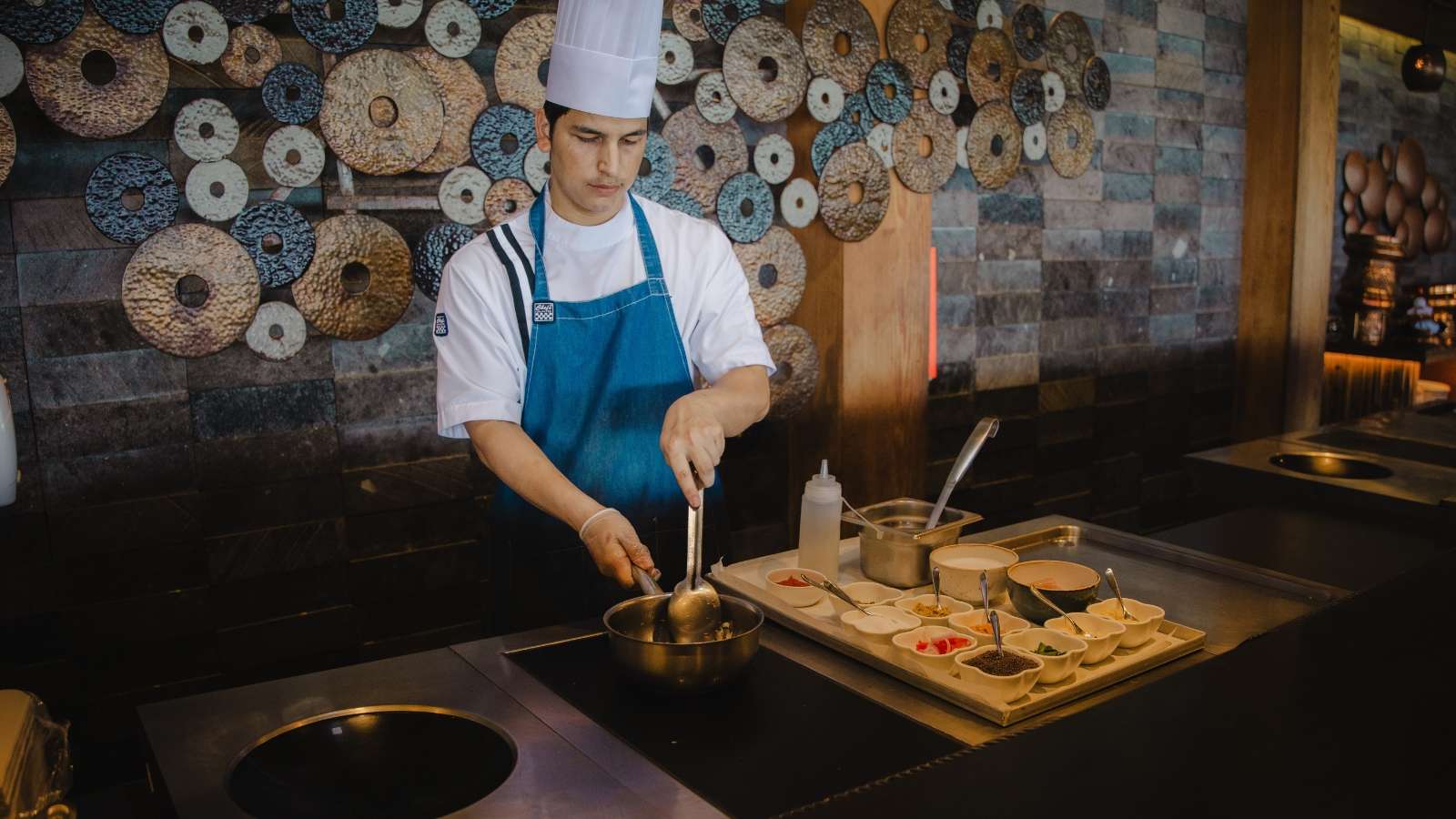
My guide for the day was Demi Chef De Partie, Pradeep Singh Panwar, a soft-spoken but expressive chef from India who carried with him not only skill, but also stories. From the very beginning, Chef Pradeep made it clear: this wasn’t just about following a recipe. It was a journey from India’s northern peaks to its tropical southern coasts-and we were going to travel it one spice at a time.
He began by laying out two dishes: Kadai Paneer, a staple from North India, and South Indian Fish Curry, a dish brimming with coastal flavors. As he introduced each ingredient, he didn’t simply name them, he contextualized them. “Cumin grows more in the north,” he explained as he rubbed the seeds between his fingers, letting the aroma rise. “And down south, it’s the mustard seeds. The climate there makes different ingredients thrive.”
It wasn’t a lecture, it was like watching a map unfold, with each spice marking a different region. He spoke of his own memories growing up in India, how the smell of turmeric in hot oil could summon childhood kitchens, and how food in India is as diverse as its people.
Dish One: The Comfort of Kadai Paneer
We started with the Kadai Paneer, a vegetarian dish I was familiar with but had never quite understood in such depth. The dish gets its name from the ‘kadai’, a traditional Indian wok, but can be made in any deep pan. The secret, I learned, lies in the kadai masala: a blend of roasted spices including coriander seeds, cumin, dried red chilies, black peppercorns, cinnamon, and green cardamoms. Chef Pradeep had us roast them gently on a dry pan until their aromas filled the air. “Don’t rush this part,” he said. “This is where the soul of the dish forms.” After grinding the cooled spices into a coarse powder, we moved on to the gravy.
Onions sizzled in oil, releasing their sweetness as we stirred in ginger-garlic paste, tomatoes, and the magic kadai masala. Chopped bell peppers were tossed in for crunch, and soft paneer cubes absorbed the bubbling gravy. The optional swirl of cream at the end added richness, but Chef Pradeep offered variations for those preferring a lighter finish. Despite its simplicity, the dish had remarkable depth, bold but not overpowering, rich yet balanced. “North Indian food is like the weather there,” Chef said with a smile, “a little cold, so the food keeps you warm.”
Dish Two: The Soul of the South – Meen Curry
Next, we ventured southward, toward coastal Kerala and Tamil Nadu, with the South Indian Fish Curry, also known as Meen Curry. If the kadai paneer was comforting, this dish was invigorating.
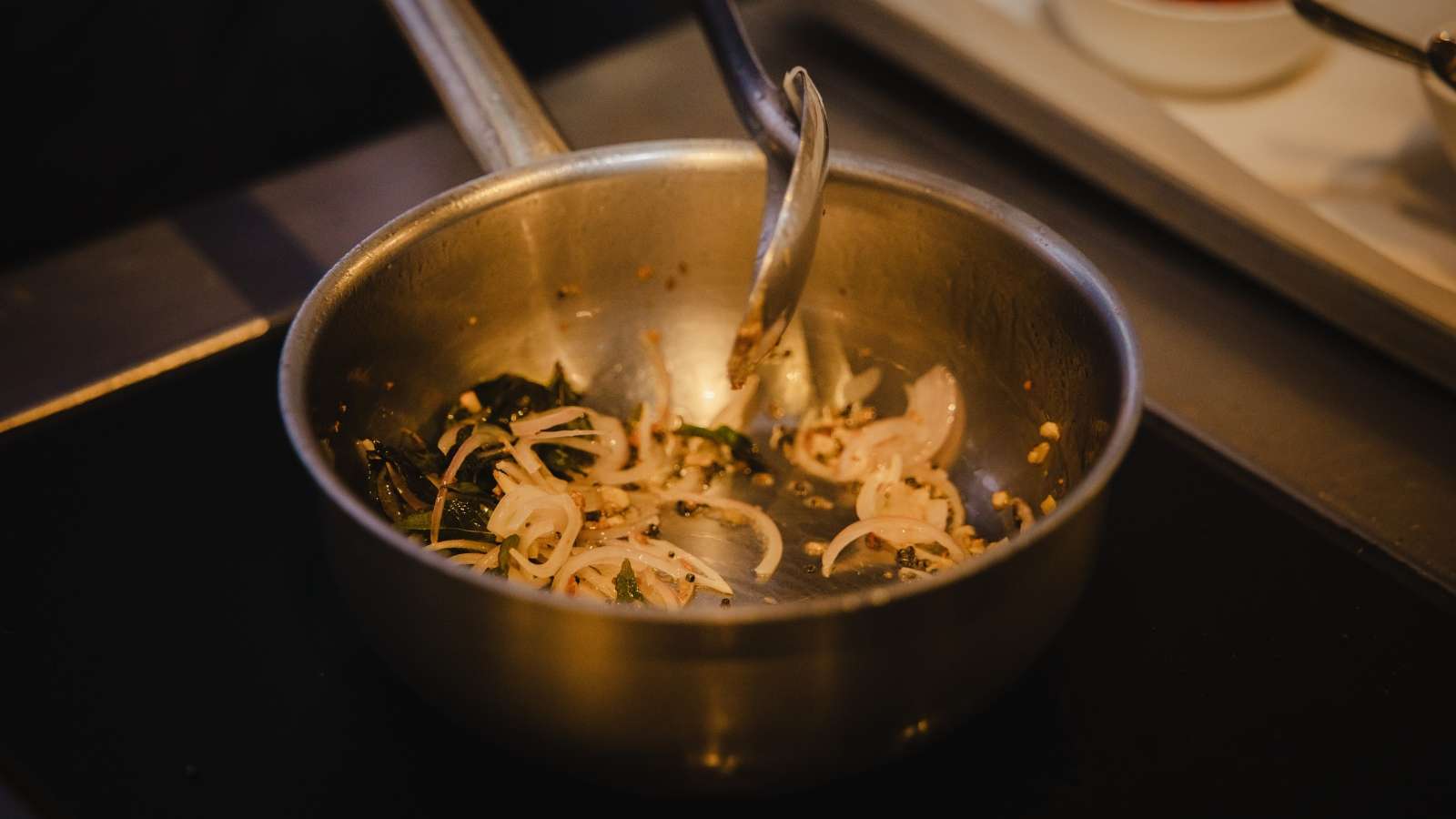
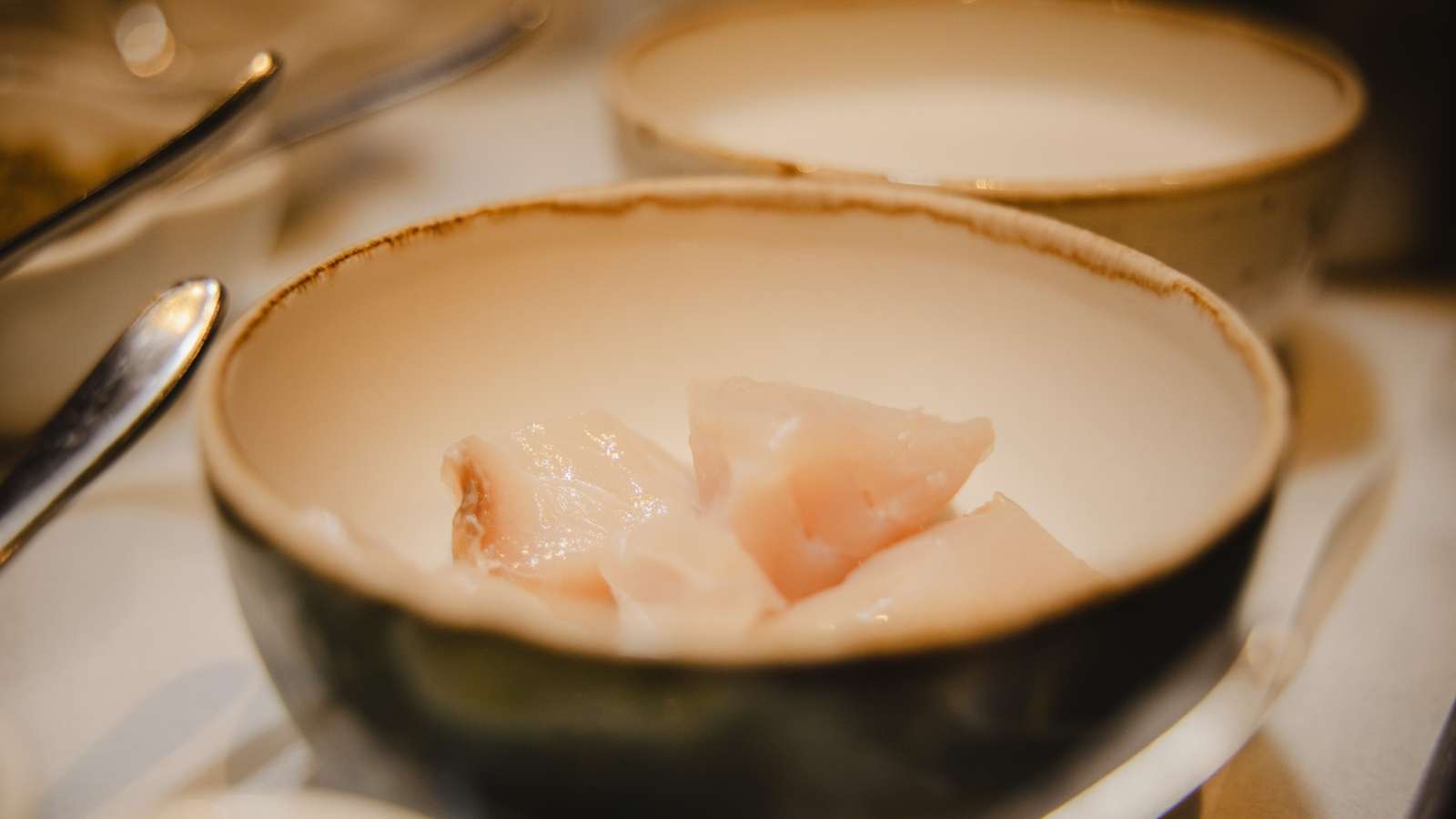
We started by marinating firm white reef fish Chef used with salt and turmeric. Meanwhile, a tempering of mustard seeds and fenugreek crackled in hot coconut oil. Curry leaves added their unmistakable fragrance, followed by onions, garlic, ginger, and green chilies. The kitchen came alive with scent and sound. As the curry simmered, we added the fish gently no over-stirring, as it could break apart. The final option to stir in a bit of coconut milk created a silkier, richer version, although Chef explained that in South India, many prefer the sharper tamarind-forward taste.
He also encouraged me to let the curry rest after cooking. “It’s better after half an hour,” he said. “The spices become friends by then.”
More Than a Lesson
The dishes were ready, my apron slightly dusted with spice, my hands still carrying the warmth of the kitchen. As I stepped out of the cooking station and into the soft, open space of the restaurant, a beautifully set table awaited me. My freshly prepared Kadai Paneer and South Indian Fish Curry were served alongside soft Indian parathas, a generous portion of steamed rice, and a selection of vibrant condiments that added bursts of flavor to every bite.
Dining alone never felt lonely, there was a quiet satisfaction in every spoonful, a sense of achievement in tasting what I had cooked under the watchful and encouraging eye of Chef Pradeep. The solitude made space for reflection: on the journey through India’s diverse culinary traditions, on the rhythm of the kitchen, and on how something as simple as cooking could forge such a powerful connection to culture. It wasn’t just a meal, it was a personal story plated with care.
Looking back, what made this cookery class so memorable wasn’t just the recipes, though I did take them home and plan to recreate them soon. It was the way it was taught, the blend of culture, history, and technique. Chef Pradeep didn’t just show me how to cook; he taught me why things are done the way they are, and how the story of a place lives in its food.
A Memory to Take Home
Hurawalhi Island Resort is known for many things, its iconic 5.8 Undersea Restaurant, romantic villas, and incredible diving, but this experience added something I didn’t expect: a deep, flavorful connection to a cuisine that spans a continent.
As I left the restaurant that afternoon, full of curry and stories, the sea breeze felt a little spicier, and the world a little closer.
Author: Aminath Hushama